AI Industrialization and FinOps: How to Automate the Processing of Complex Documents (SDS) Using LLMs
Deployment of an OCR & AI pipeline with Symfony and OpenAI: cleansing 140k data records and reducing development time by 6 months for OPPBTP.
 Codéin
07/07/2026
Key elements
Challenge : Modernize a platform that was becoming obsolete and experiencing declining traffic due to a user experience that was difficult to evolve, while ensuring continuity of the data already recorded.
Objectives :
- Deploy a modern, secure, and intuitive platform to boost user engagement.
- Migrate and consolidate historical data to ensure a smooth transition without duplicates.
- Make the database a national reference.
Solution provided : The solution is based on the creation of a community database resulting from the processing of 140,000 data records, cleaned and deduplicated using an AI-optimized clustering algorithm. To ensure continuity, a script automatically reassigns these qualified products to users’ inventories while providing detailed matching reports. The innovation lies in an AI extraction module that automates product addition by analyzing Safety Data Sheets (SDS) through OCR and segmentation into text files. This process pre-fills forms for the user before final validation and moderation by OPPBTP.
Result : A modernized and scalable platform, with a 112% increase in monthly logins and the creation of a community database containing 35,000 validated products.
Next steps : OPPBTP plans to integrate automatic regulatory alerts and personalized recommendations based on each company’s business context.
Watch the full case study presentation on video (starting at 32:45).
Context and challenges
A long-standing player in prevention, OPPBTP supports construction companies in managing hazardous products. Launched in 2014, its dedicated platform now requires a redesign to meet new digital usage patterns and current security challenges.
Despite a substantial information asset of 140,000 registered products, the tool was experiencing declining usage:
- Declining engagement : A 25% drop in monthly logins since 2020.
- Obsolescence : An urgent need for ergonomic modernization to remove barriers to use.
To reverse this trend, the redesign is built around three main pillars :
- Restore the attractiveness of the interface to ensure widespread adoption.
- Clean up the historical database without losing information.
- Transform manual data entry, perceived as tedious, into an automated service.
Choice of partner and solution implemented
The solution was built on the latest developments in the Symfony ecosystem (version 7.2) and API Platform, ensuring a robust REST API. The key innovation lies in using AI with Symfony to orchestrate OpenAI models (via Python). This stack, complemented by Elasticsearch for search and RabbitMQ for asynchronous task management, makes it possible to pre-fill 90% of the product-addition form, reducing the risk of human error.
Testimonial
We have been working with Codein for several years. They created an application tailored to the construction industry. The project is closely monitored and continuously improved. The teams’ technical expertise, attentiveness, and commitment provide real peace of mind when carrying out our projects. It is a pleasure to work together every day.

Project timeline
The project was carried out over an 18-month period, representing an investment of 400 person-days. The organization was structured around a service center bringing together OPPBTP business experts, the Codéin technical team, and our UX/UI partners for the Design Sprint.
The first phase consisted of benchmarking existing solutions for the extraction process, with AI proving to be the most effective solution.
The second phase was a Design Sprint, which made it possible to prototype and validate the new user journeys with field teams before development began.
The core of the project then focused on data normalization. With more than 140,000 products recorded inconsistently over ten years, we deployed an algorithm (error rate < 5%) to merge duplicates. AI was used from this stage onward to correct historical data-entry errors and “qualify” the data before migration. This cleansing work lasted several weeks and concluded with a final script running for several days to accurately reassign each product to the specific inventories of user companies.
From a technical standpoint, the AI integration follows an optimized industrial workflow : an initial OCR layer converts the safety-sheet PDF into raw text, then a Python application segments the document to extract only the critical areas (hazards, components, manufacturers). This approach keeps API consumption costs under control while optimizing response relevance. Finally, a complete CI/CD pipeline via GitLab (PHPUnit tests, security audits) ensures the stability and long-term reliability of production deployments.
Results and next steps
The tool has moved from isolated management by individual companies to a consolidated community database, eliminating redundancy and improving the reliability of entered data. The web application has become the “Yuka” of chemical products, with a major increase in usage.
Overall activity has increased by 112%, while contributed products have grown by 145%. In addition, integrating AI into Symfony saved approximately six months of custom development.
Thanks to the modernization of its technical foundation, OPPBTP has reached a new milestone with the launch of a Progressive Web App (PWA). OPPBTP plans to integrate automatic regulatory alerts and personalized recommendations based on each company’s business context.
Best practices
- AI FinOps – controlling costs through preprocessing: Rather than sending raw documents to the OpenAI API, we implemented a three-step preprocessing pipeline: converting the scan into text, extracting the relevant key points, and only then sending the content to the LLM. Reducing the input context in this way helps control OpenAI costs and prevents expenses from escalating as adoption of the tool increases.
- Anonymization – separating user / company / product data: The processing pipeline is designed so that no data capable of identifying a user or company is transmitted to the LLM during an extraction request. The link between a request, its sender, and the analyzed product is reconstructed only outside the AI context. This architecture ensures compliance with confidentiality requirements without relying on the LLM provider’s contractual guarantees.
Points of caution
- Response time : Processing time per document can reach around thirty seconds depending on the volume of data to be extracted. This parameter must be anticipated from the UX design stage and when sizing processing queues to avoid any perceived degradation for users.
- Hallucinations and missing data : An incomplete or incorrect extraction rate of around 5 to 10% has been observed. Human verification remains necessary for critical fields. This rate must be monitored and incorporated into the SLAs defined with the client.
- Vendor dependency : The entire pipeline relies on a single LLM provider (OpenAI). An outage or a change in the provider’s pricing or contractual terms would have a direct impact on service continuity. An exit strategy should therefore be anticipated.
- Digital sovereignty : The use of an OpenAI model (a US provider) legitimately raises the question of data sovereignty. This point was explicitly discussed with the client: the data transmitted to the LLM consists exclusively of public supplier data about products, with no personal or confidential data. The risk of leakage is therefore limited and considered acceptable at this stage.
From an architectural standpoint, the system was designed to allow the LLM to be replaced without a major redesign, either with a self-hosted open-source model or a European provider, should sovereignty requirements evolve.
Comments
No comments yet. Be the first to comment!
You must be signed in to add a comment.
Dated at the model level
- Review by
- 07/01/2027

Modernisation de l'application web OPPBTP
Tags
REX produced by
Project images
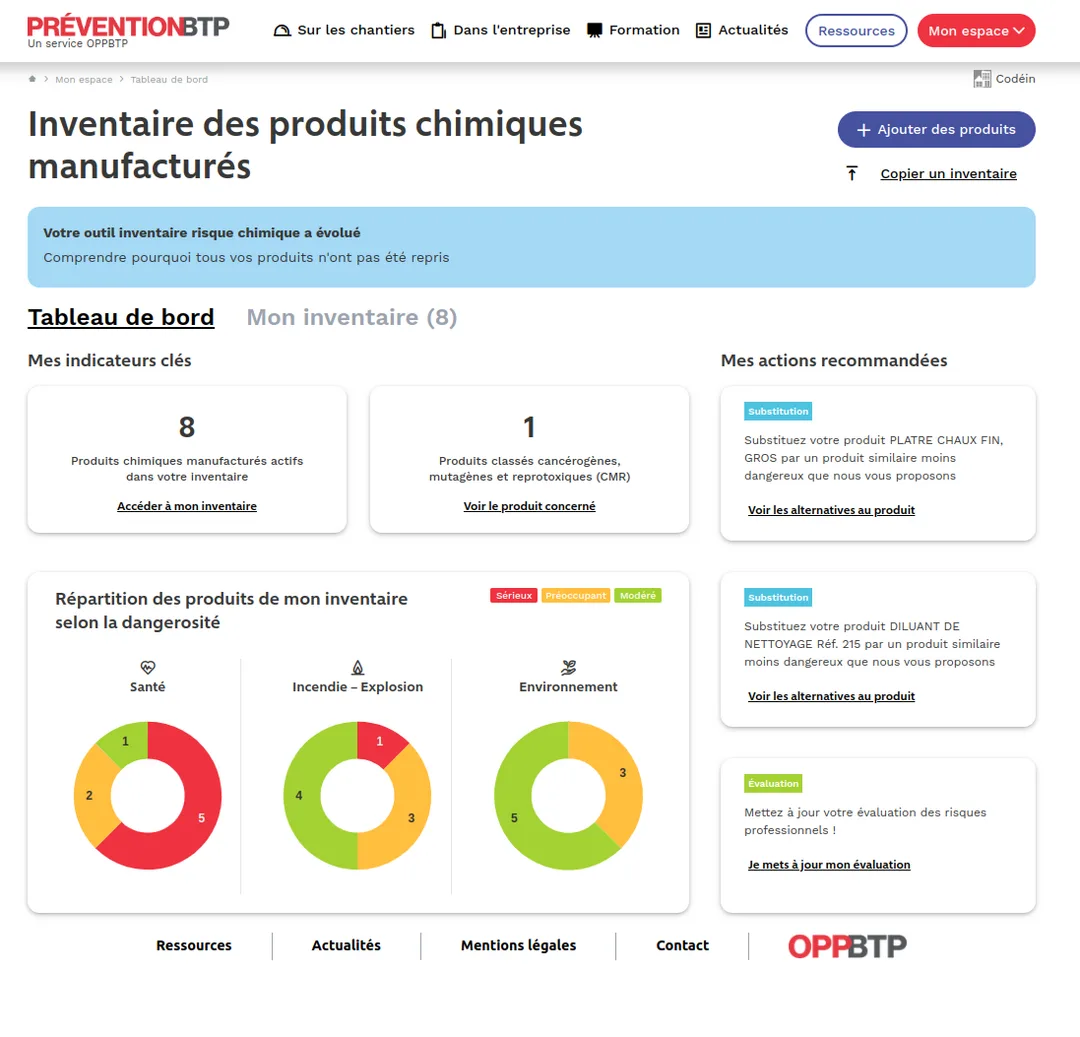
Tableau de bord OPPTBP
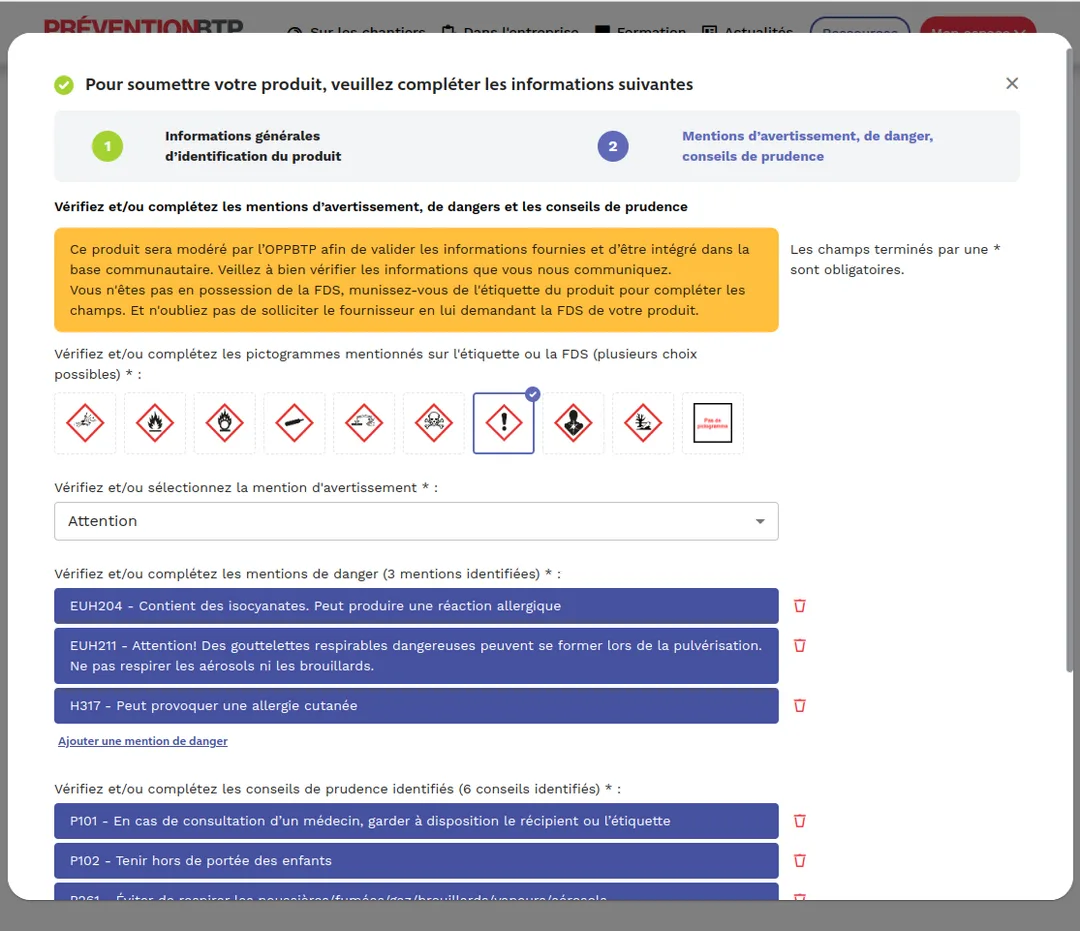
Extraction de données PDF grâce à l'IA